Advent Reflection 21: [The Missing] Gift

“When they saw the star, they rejoiced exceedingly with great joy. And going into the house, they saw the child with Mary his mother, and they fell down and worshiped him. Then, opening their treasures, they offered him gifts, gold and frankincense and myrrh” (Mt. 2:10-11). 

Today’s reflection will be in audio form. It comes from last year’s Christmas Eve service. I had hoped to have it transcribed for today’s reflection but ran out of time. Even if you were there, it may be worth another listen, if for nothing else but to have another laugh at the thought of Steve Robinson in diapers 🤭.

  • To access the audio file of The Missing Giftclick here.

  • If you would like to read an old Advent reflection I wrote on Hope instead, click here.

Advent Reflection 19: Light

The following reflection is a special guest post from my sister, ChristiAnna Coats. It is a beautiful story that demonstrates how the light of Christ often shines brightest in the darkest of places. For more of her writings, you can buy her first book on Amazon (also a great stocking stuffer!): click here for link.

A light for revelation to the Gentiles,
and for glory to your people Israel” (Lk. 2:32).


Originally Titled: Captive

I sat in the cold, stone room for what seemed like ages anticipating their arrival. Curiosity and nerves were competing for first place in my typical over-emotional state. Being a ‘feeler’ can be exhausting.  It’s difficult to explain what a typical daily emotional roller coaster a ‘feeler’ has to ride.  I can go from crying tears of injustice to laughing hysterically at situational ironies in a matter of minutes. There has been no greater invention in recent years than the emoji, which helps solidify every single text I send. Without it, my text recipients are left to wonder my true feelings.

The room was cold.  It was silent.  Eerily silent.  I was curious. Or nervous.  And then a sound of a low steady hum slowly emerged from the silence.

The prisoners were coming.

My mom and I, and an inter-denominational makeshift congregation, were in the bowels of Raleigh Central (maximum security) Prison awaiting the arrival of the convicted felons and those men who had chosen to minister to them. This was the closing ceremony of a three-day spiritual renewal experience for the prisoners. Michael (ChristiAnna’s husband) was a volunteering minister.  I came to support Michael.

I fully expected to be consumed by discernment, the prickly hairs on my neck to stand on end as I met the roughest of the rough.  The vilest of offenders.  The rapists.  The murderers.  The thugs and thieves.  I fully expected that I would be accosted and undressed by their vicious eyes.  I expected to be disgusted and nauseated at the thoughts of what had put them behind those bars and barbed wire.  I fully expected that.

The soft hum was gaining volume.

It was a song.  A familiar one.

Finally, it grew to decipherable lyrics…

Surely the presence of the Lord is in this place.
I can feel His mighty power and His grace.
I can hear the brush of angel’s wings,
I see glory on each face. 
Surely the presence of the Lord is in this place.

Their deep, modulated voices created so pleasing a sound that it shattered my expectations and I was filled with conviction. The voices became louder and their echoes filled the prison walls from end to end. Tears flooded my eyes and I wept at my pride. They continued to sing upon entering the room, and though I tried, I could not distinguish between the captive and the free. Instantaneously the barriers created by past mistakes and current condition were vanished, and I can’t articulate in mere words the serenity that was in that place. We were one. One Body. A royal priesthood.  Surely, the Lord was in that place.

One by one, the men gave their testimonies.

One by one they shared how they had experienced God that weekend. One by one they shed tears of repentance. And tears of grace, received.

A young man stood to share. His calculated gate was evident as he took his place at the mic. His hair, in dreads to his shoulders, covered his brow. He hung his head. After what seemed like an eternity, he lifted his head to speak. I’ll never forget that face. Seven years later, I can still see it as vividly as a photograph in my mind. His cheeks were round, his eyes – soft and round and brown, not cold. Warm. InnocentIt was the face of a child.  Your child. My child. I was immediately drawn to him. My maternal instincts flared so abruptly, I nearly approached him to sweep his hair from his eyes. I showed incredible restraint and stayed seated.

“My whole life’s been hard,” he began, as his voice cracked.  He had to pause and wipe a tear from his bright, right, brown eye.

I had to compose myself as well, in order to collect the puddle that had become of my body on the cinderblock floor.

I saw his life.  I saw my life.  I saw my mother gently tucking me into a warm bed and kissing my forehead.  I saw him alone and cold and unattended.  I saw my dad walk beside my bicycle as I learned to peddle on my own, giving instruction all along the way. I saw him walking the streets, alone, figuring out life as he passed through it.  I saw my mother dropping me off at the front door of the school.  I saw him being schooled on the street.

I saw exactly how he came to be where he was.

That day I was given a new set of eyes through which to see the people God created.  The lost, hurt, broken, rejected, outcast, forgotten ones.

“Therefore, if anyone is in Christ, he is a new creation. The old has passed away; behold, the new has come” (2 Cor. 5:17).

The need for my own repentance overcame me, and I had to seek forgiveness for my hardened, judgmental heart. I thought I had gone there to let my little light shine. And when the blazing fire of Christ entered the room through praise and testimonies of the prisoners, I realized it was I who had been captive. That I needed to be set free—free from the bondage of judgment and pride and self-righteousness. Free to love fiercely, mercifully, and unconditionally just as He has loved me.

That day changed me. That day I gained the audacity to believe that Jesus could make all things new, even a wretched, captive, sinner like me.

Advent Reflection 18: Salvation

Please see Advent Intermission: Disclaimer regarding forthcoming reflections, if you have not yet: click here.

irony

 “Now there was a man in Jerusalem, whose name was Simeon, and this man was righteous and devout, waiting for the consolation of Israel, and the Holy Spirit was upon him. And it had been revealed to him by the Holy Spirit that he would not see death before he had seen the Lord’s Christ. And he came in the Spirit into the temple, and when the parents brought in the child Jesus, to do for him according to the custom of the Law,  he took him up in his arms and blessed God and said,
 “Lord, now you are letting your servant depart in peace,
     according to your word;
 for my eyes have seen your salvation
     that you have prepared in the presence of all peoples” (Lk. 2:25-31). 

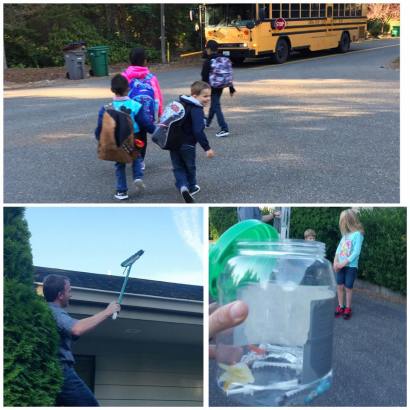
Below is a journal entry from Kezek’s first day of kindergarten, dated September 7, 2017, under the heading “Kindergarteners, Heroin Addicts, and the Gods”. It was a day I found myself “waiting for the consolation” Israel was waiting for, a day I found myself longing to see with my own eyes the salvation Simeon saw with his.


This morning I sent off my son to his first day of kindergarten and headed off to work. Upon arrival, I met Pastor Eric retrieving a needle from the roof to add to the cookie jar of despair. The bus is filled with hope and futures, the jar with hopelessness, futures buried alive.

I left this morning watching my son’s mother offering up to God the kind of tears that somehow prove the goodness of the world and the meaningfulness of life. But I wonder about the mother’s tears that are falling to the ground today from a heart that needle has pierced. I wonder, with dread, what it is like to see a child bury his future alive, what it is like to anticipate burying a child dead. How does a mother hang on to hope as she watches her son let it go, when her hope is so bound up in the future of her children

Maybe she couldn’t hold on. Maybe she just couldn’t produce enough tears to fight back the famine claiming her family’s future. Maybe she was fighting alone, no father’s tears wetting her son’s heart, no husband guarding hers. Perhaps her heart, chapped and exposed, over time cracked open with so many sorrows that her soul has fractured into sand. The tears she so faithfully offered up for so many years, alone, never yielded a future in the life on whose behalf she offered them, only more God-damned thorns, only more of that entangling thicket slowly wrapping around her son’s neck, crowning its victory over his future, her future. Her tears never found their way to a Garden. The all-consuming ground is dried up of any goodness, fertility, newness. It’s all just burial ground.

Who among the gods will come to such a world? Let him come.

Who among the gods will come to such a mother? Let him come.

Who among the gods will come to such a son—as a man caught up in the thickets, to wear his crown, to be damned into the desert floor? Who among the gods will come to this world, to be chapped, broken, buried?

For there can be no other world for this mother and her son, so there can be no other God for this world.

 “The wilderness and dry land shall be glad;
     the desert shall rejoice and blossom like wildflowers.
     It shall blossom abundantly and rejoice with joy and singing…
     And they shall see the glory of the Lord,
     the majesty of our God” (Isa. 35)…

“The Spirit of the Lord God is upon me,
    because the Lord has anointed me
to bring good news to the poor;
    he has sent me to bind up the brokenhearted,
to proclaim liberty to the captives,
    and the opening of the prison to those who are bound;
to proclaim the year of the Lord’s favor,
    and the day of vengeance of our God;
    to comfort all who mourn;
to grant to those who mourn in Zion—
    to give them a beautiful headdress instead of ashes” (Isa. 61)…


Then so be it. But if this world is not being disposed of and replaced—if it is the wilderness that shall be glad, the desert that shall rejoice, the mourners that shall be comforted, then the glory of God must first be dried up and deserted, must first rain down only in a veil of tears. If Beauty is to rise up from the ashes, it must first be burnt down to the same. But who will come to have his Majesty crowned with a curse, his Highness buried with all futures lost?

For if a new song of rejoicing is ever to arise from the parched ground of this disheartened world, it will have to enter at first in tune with a symphony of sorrows.

Who among the gods is so willing? Who among the gods is there with a heart like that for a world like this, a God of sorrows, Man of sorrows?

Then let Him come. Jesus, come. 

O come, O come, Emmanuel,
And ransom captive Israel,
That mourns in lonely exile here
Until the Son of God appear.
Rejoice! Rejoice!
Emmanuel shall come to thee, O Israel.


Advent Intermission: Disclaimer

I feel it necessary to provide a disclaimer for the forthcoming reflections as we near Christmas Day. The goal of Advent is to whet our appetite. As I mentioned in our first Advent Reflection, contrary to our culture’s commercialization of this holiday season, Advent is about anticipation, not arrival, and just so is intended to heighten our appreciation of the arrival of Christmas when it comes. Looking forward to anything is half the joy of its arrival. 

But the anticipation of Advent is not simply an attempt to heighten our appreciation for the arrival of Christ’s first coming; it is also, and more centrally, an attempt to heighten our anticipation of Christ’s second coming. A Christian is a person who believes both that Jesus Christ has come to offer us salvation from our sins and is coming back to complete our salvation by judging the world in righteousness. Advent, then, is intended to orient us to the future we are called to anticipate, to hope in, and to invest in, so that we do not waste out time and our investments in false hopes and dead-end futures. 

With that said, in keeping with the true spirit of Advent, as we near Christmas Day the goal of these reflections is to increase our longing for the return of Christ. So if these reflections seem to be moving away from the Christmas spirit, I can assure you the movement is intentional and, in my best judgment, is moving us more deeply into the true Christmas spirit, not away. The world darkens before the Light comes (Jn. 3:19). But as the days grow dimmer, hope becomes clearer. May God help us learn how to long for him.

O come, O come, Emmanuel,
And ransom captive Israel…

Advent Reflection 17: Gift

kezeks-first-communion

“And when the time came for their purification according to the Law of Moses, they brought him up to Jerusalem to present him to the Lord (as it is written in the Law of the Lord, “Every male who first opens the womb shall be called holy to the Lord”) and to offer a sacrifice according to what is said in the Law of the Lord, “a pair of turtledoves, or two young pigeons” (Lk. 2:22-24).

Under the Old Covenant, God claimed the firstborn son of every Israelite. They were required to bring him to the temple and offer a sacrifice to “redeem” him back as a sign of how God saved them from slavery in Egypt, a sign of Passover. When Mary and Joseph brought Jesus to be offered up to the Lord, but redeemed from him, the story takes a turn. A man full of the Holy Spirit named Simeon intercepted their firstborn and declared, “My eyes have seen [the Lord’s] salvation…Behold, this child is appointed for the fall and rising of many in Israel” (cf. Lk. 2:25-35). Mary and Joseph would not offer a sacrifice to redeem their only begotten Son back, because it turns out this was not their offering to God but God’s offering to them, to us all. God had sent his only begotten Son as a sacrifice to redeem back all the children of the earth. A new Passover had arrived. 

It is no longer necessary to offer any sacrifices to God but only to remember the sacrifice he offered—offers—to us, and to give him thanks for it. We do this by obeying Jesus’ command of continuing to celebrate the Lord’s Supper, also called Holy Communion, also called the Eucharist, which translated means, “Thanks.” This is the new economy of the New Covenant. When something is offered as a Gift, the only response is gratitude. 

“And he took bread, and when he had given thanks (eucharisteo), he broke it and gave it to them, saying, “This is my body, which is given for you. Do this in remembrance of me.” And likewise the cup after they had eaten, saying, “This cup that is poured out for you is the new covenant in my blood” (Lk. 22:19-20).


Originally Titled: First Communion (March 3, 2015)

I remember the first time I received Holy Communion.

Growing up, I belonged to a Quaker church. Quakers are really into the Spirit of Jesus so they don’t bother with the commands of Jesus to baptize people and share the Lord’s Supper together. That all just amounts to foreplay and they’d rather get straight to the Spirit behind all that common incarnate stuff. My father had been a Quaker pastor in the early years, but he had by this time quit being a Quaker pastor and resigned to being only a part-time father. And this makes my first experience receiving Holy Communion all the more bazaar.

It was in a Roman Catholic church and I was there with my father. I think my sister ChristiAnna was there too. We were quite young. I am pretty sure it was our first time stepping foot in a Roman Catholic church. It was, at any rate, the first time I ever felt the two extremes that characterize holy places—I felt at once like I absolutely did and absolutely did not belong there, which is exactly how grace feels.

But I don’t remember the entire experience. Everything I remember is tethered to the moment I received the Elements. Vaguely, the memory begins with my father insisting that we proceed from the pew toward the altar. He explained that we would be breaking the house rules by doing so, but only in the name of some other House and some other Rule. I don’t remember the details to that. I just remember that it was my responsibility to act as though I were entitled to receive whatever they offered me up front.

I remember feeling the feelings of a song I had long sung. My heart was filled with the tension of fear and fear relieved the whole time, which is exactly how grace feels and perhaps why it feels amazing. The priest made his way along the altar eventually arriving in my space. It however felt as though I had arrived in his space, or at least Someone else’s space. I can understand why some people take off their shoes in holy spaces. Its because it feels like inhabiting Someone Else’s shoes.

When I reached out and grabbed the wafer, breaking protocol (you’re supposed to receive it passively), three things were immediately clear. First, I had never done this. Second, the priest knew I had never done this. But perhaps in the way only a priest or a father could communicate this without saying anything, the third thing that was as clear as day was that this priest was glad I was there and happy to help me break the rules. Apparently he and my father imagined some other present Order in that very Present moment.

The wafer tasted like cardboard and had a similar texture too. The wine was so bitter, probably because I had never tasted wine or more probably because the priest said it was blood. (No wonder we were Quakers.) But this wine has never ceased to linger in my memory like only the best wines linger. And it lingers sweetly. It is a favorite memory of mine. Maybe it was the strangeness of it all, the beauty of the cathedral, the fact that I was with my dad—I loved being with my dad—or with this priest—he really was fatherly in his own right. Whatever it was, it was real like a rock and sweet like my mother’s love, and I wouldn’t trade the memory of it for all the cathedrals in Rome.

So you can perhaps imagine how I must have felt last night when I was given an opportunity to stand in the place of a priest as a father and serve my firstborn son Holy Communion. We had just heard a wonderful sermon at Embrace United Methodist Church by John Gallaher on Mark 2 about the man who was lowered by his friends through the roof to receive healing from Jesus. The faith of the community brought the man to Jesus and Jesus gave him more than their faith had asked for. Jesus forgave his sins and proved he could do so by healing his body. The religious leaders complained, but the man carrying his mat walking out the door did not complain. Neither did his friends. Faith always expects something from Jesus, but genuine faith does not complain about the mess of the overflow. I am not a Pentecostal, but I do not complain about Pentecostals.

During the sermon, Kezek would not sit still, so I made paper airplanes to keep him busy. By the end of the sermon we had an entire fleet. John had asked a couple of us to serve Communion before the sermon, so after he finished Meredith and I proceeded to the front. Megan and Kezek got in line. Megan guardrailed Kezek forward. When he arrived at the front, Meredith knelt down, extended the loaf toward him and said, “The body of Christ, broken for you.” He reached out and grabbed a piece as though he were entitled to do so. He seemed to know exactly what to do according to the protocol of an open Table, according to some unspoken but known Rule of some unseen but present House.

He then took a couple lateral steps toward me. I knelt, extended the cup, and said, “The blood of Christ, shed for you, Kezek.” He looked at me I swear with a new set of eyes—like I was the same old father but also someone brand new—dipped the bread in the cup, put it in his mouth, took a few more steps and, without instruction, knelt down on the altar (even though most in line were going straight back to their seats after receiving the elements). He knelt there like it was exactly where he belonged. He miraculously stayed still for about ten seconds while the King of the Universe tore an infinite wound in space and time and flooded the heart of a child with grace upon grace. I don’t know if that second miracle actually happened, but I think it did, and it is in any case the best explanation for the first miracle of Kezek staying still for ten seconds. And in a certain sense, it is the only thing I really know that happened last night. And it was a miracle.


If there is a single statement I am willing to die for in this world, it is the statement Jesus makes about children and about his kingdom. It is a statement that must be taken in its plainest sense, I mean plain like potatoes and the periodic table, plain like the tables of the Law. It is elemental and concrete, smaller than any doctrinal statement and yet every doctrinal statement must bend itself around its basic claim. It is found in Luke 18, Matthew 18, Mark 10, and the entire Gospel of John. In Mark it reads like this: Jesus’ disciples have clocked out but people keep showing up at the office, mothers and kids and all the racket. So the disciples start rebuking them, despite the fact that Jesus had already told them they’d be better off having a millstone tied around their necks and cast into the sea than getting in the way of children coming to him (Lk. 17:2; Mt. 18:6)

[I once heard a Calvinist argue that some babies must be predestined to hell because otherwise Christians shouldn’t be against abortion since if all babies go to heaven Christians should therefore endorse abortion. For the record, babies do not go to hell and Christ still condemns abortion, and probably that Calvinist too.]

“But when Jesus saw it,” Mark reports, “he was indignant and said to them, ‘Let the children come to me; do not hinder them, for to such belongs the kingdom of God. Truly, I say to you, whoever does not receive the kingdom of God like a child shall not enter it.’ And he took them in his arms and blessed them, laying his hands on them.” (Mk. 10:14-15). If you want to spend the rest of your life trying to wrap your mind around God, that is a good place to begin, also to end. 

The reason last night will exist in my memory as one of the most important moments in my life is because last night I learned that leading children into the kingdom of God is the way God uses children to lead adults into the kingdom of his beloved Son. Last night I grew up and became a priest. But then I learned how to become a child by watching my child enter the kingdom and remembering what it was like to receive the kingdom as though I were entitled to it, by grabbing it as though it were already mine. Last night I remembered that in Christ the whole kingdom is already mine, because it is always already His.

I remembered that God comes to us only as grace, and that children do not complain that God comes to us only as grace. Children do not deny their need for grace, only adults. No child has ever argued against original sin, but a lot of adults have. Because being an adult means defending yourself. Adults can become so powerful in their defense that they manage to hold at bay the entire kingdom of God. The gates of hell will not prevail against the Church, but that doesn’t mean that I can’t keep the gates of my heart locked. It doesn’t mean that I cannot become the gates of hell and reject the gates of pearl. It does not mean I cannot grow old.

I was reminded last night that to enter the kingdom of God I had to open myself up with something like the unquestioning vulnerability of a defenseless child, or that of a crucified God. I had to become open to grace like I needed it. Jesus opened himself up to nails like he needed them. Opening up to grace feels scary like opening up to nails before you do it, but then somehow refreshing like a shower after, like Jesus on his walk up Golgotha but then like the soldier on the way back down.


One time as a child I broke my toe while trespassing with my godless brother and sister and cousins (I was the youngest and most innocent) in a foam factory that may as well have been Disney World. We lied and said I broke it on a brick pile. After it swelled up like a light bulb my dad came at me with the leather punch out on a Swiss Army knife, like a soldier with a sword but more like a father whose heart hurt like my toe, but worse. As he twisted metal into my flesh out came the crimson flow and with it like a Siamese twin my confession. I confessed that we were all liars and nothing in my life has ever felt as good as that knife and that confession. Nothing has ever felt more like grace either. It was amazing relief in the form of blood spattering all over the place. And it came only when the one I trusted most stabbed me in the place that hurt the worst. I had to open myself up like a vulnerable child, or a crucified God, because I had lied and closed myself up like an old man.

Kezek helped me open up again last night. And I can say that this is one of the few times I did not complain about my need to open up, to be wounded, and to be healed. When my time came to take the Elements, I confessed to God that I am a liar and it felt so relieving and so bloody to do so.

I also remembered last night that there are a lot of things I ask of Jesus, and that Jesus is always giving me more than I ask for, even though sometimes it feels like he’s not giving me exactly what I ask for. I remembered that I need a community of people to lead me to him and to lead my children to him, not because Jesus needs a community to accomplish his work, rather because Jesus’ work accomplishes community, because it is the work of receiving people, which is the hardest work of all. I remembered last night that God’s House is the community of Jesus (Eph. 2; 4; 1 Cor. 6; 1 Pet. 2).

Lastly, I remembered that in God’s house there is only one Rule: Receive the Gift of your life by receiving Jesus’ death: “Eat my flesh and drink my blood” (Jn. 6), and this do as though you are entitled to do it and as though your life depends on it, because you are and it does.

The Table is open. Come to Jesus.

“This do in remembrance of me” (Lk. 22:19).
Advent Reflection 16: Wonder

 Illumination ©Beth Cole | Oil on Canvas | 9 x 12

~ Beth Cole, “Illumination”

When the angels went away from them into heaven, the shepherds said to one another, “Let us go over to Bethlehem and see this thing that has happened, which the Lord has made known to us.” And they went with haste and found Mary and Joseph, and the baby lying in a manger. And when they saw it, they made known the saying that had been told them concerning this child. And all who heard it wondered at what the shepherds told them. But Mary treasured up all these things, pondering them in her heart.

How else can those undeniable experiences of God be described? I have asked and continue to ask innumerable questions about God’s existence, but I have never walked away from an encounter with God with more “answers.” That’s just the wrong category. I get answers from the Bible, but I do not get answers from God himself. I have never walked away from an encounter with God answering everything but rather pondering everything. I’m not firmed up in rigid certainty. I’m opened up in wonder

Having said that, I have attempted to describe what that opening up and that pondering is like. Below is a journal entry that has many dates attached to it, both because of the many times I’ve come back and tried to do a better job of capturing my experience in words, only to be left evermore certain that such experiences simply cannot be so captured any more than a voice can be captured in a photograph or lightening in human hands, but also because in principle it could be attached to any time, any date, I have been encountered by God. Every such encounter takes me back to the first, where I am again a little boy, small, and God is again God—those times I again discover that God is God and I am not. As such, you will have to pardon the apocalyptic tenor of my descriptions, but you’d be better off embracing them.  


Originally Titled: A Longing with A Name

It was on my way from the chapel back to the cabins, a short walk through the woods at Quaker Haven Camp in Northern Indiana. I was eight years old. We had just been released–finally!–from the obligatory chapel session where things were obligatorily said like “God loves you” and “Jesus died for you.” The camp director gave us an extra hour of free time until lights-out since it was the last night. Unassuming, I began to hurry back to the cabin to get my flashlight and all-black burglar attire to play capture the flag. Then—I froze.  

I was stuck staring at something invisible and everywhere, at nothing and everything. It was kind of like the Holy Spirit people at church always talked about, but perhaps more like the Holy Spirit. There were trees. There was transcendence. The earth had lost its horizons. My vision stretched the present into forever and rebounded back. And I saw everything again, as if for the first time. I’m almost tempted to describe it as an “out-of-body experience,” but it was more like the exact opposite. It’s not that I was seeing myself from without so much as I, indeed everything, was being seen, known (something like 1 Corinthians 13:12). But even that doesn’t do it justice, because it wasn’t like discovering the presence of someone who was spying on me from behind the trees. It was more like discovering the presence of Someone spying on me and the trees and every else that could be rounded off with a name, delimited from the presence of everything it is not. It was like discovering Presence itself.

I was enveloped, but not I alone. The whole cosmos had been tucked away like a bird hidden in an old man’s inner breast-pocket. It was, in a moment, a rush of Wonder and, in the next, the strike of Revelation. And in an experience of unsolicited arrival, I found myself at the crossroads of a longing I didn’t know I had and a joy I didn’t know I could have, a place I wanted to call home–in the way Peter on the mountain wanted to build three tents. And I may as well have been dead, or I may as well have just been born. I felt like a shadow that had suddenly turned around and discovered just how sad and flat was the world I had been living in all along.

I had just stumbled into the living God. It wasn’t an emotion. I did not feel a sensation or get cold chills and my heart wasn’t “strangely warmed.” I knew it in the way you can only know shame or fear or trust or hope. It is not something you can prove but something that somehow proves you. The thing I distinctly remember thinking over and over was, “God is here.” I don’t mean “thinking” like most thoughts, airy and speculative. I mean the way you might find yourself, dumbstruck, thinking, “A Lion is here,” were you to stumble on one in the woods. And I don’t mean “here” as in “around here” or “here in my heart.” Just “here,” where I was, where the universe was. Also, I don’t mean “God” in any unspecified sense. It was the One they’d named in chapel. It was Jesus, but not exactly the Jesus I’d always known. Jesus had always been floating around in my childhood mind, but so had Ronald McDonald. But in that moment, Ronald remained as statuesque as a Greek god but Jesus had just descended like lightening. So in a rush of greed, like a moth, I extended myself to take hold of him, and then—gone.

It had lasted for maybe ten seconds, maybe for all eternity. I couldn’t tell. And I wasn’t even sure it had happened, or I wasn’t even sure that anything else had ever happened. It only now existed as a longing that felt like a bashfully hopeful heartache. I remember trying to adjust my body, refocus my eyes, send my thoughts back to where they just were, run back in time, stop time, start my whole life over so I could run into this Moment again. But I could do nothing of the sort. It was the start-and-stop of wonder in capturing the invisible now, like the moment my kids finally seize a soap bubble floating about in thin air, leaving only a filmy residue of the mystery. I have been nudged by some slippery force who spoke the primal Word in an unmistakable voice and then disappeared behind the trees, as if to taunt me, as if to reveal that it was I who was hiding. So that eternal Moment was gone but I was still there—just me and time and the untamable God who escaped my grasp and was forever on the loose. I had discovered a world where God was everywhere yet nowhere to be found. 

When I convinced myself to let go and continue up the ordinary hill into a now very unordinary world, I felt as if I had stolen something and everyone, indeed everything, became terribly suspicious. The universe had become one giant, illusive conspiracy. It was one big house of mirrors and I had just glimpsed through the only window in the house as the curtain was being drawn. I felt as if everyone either had this shared secret they’d been keeping from me or I had a secret that no one else knew about. But I didn’t know which it was. So I never told anyone. What was there to tell anyway? And who would have believed me? It was a pearl and the disbelieving world was swine.

But I treasured it in my heart. I treasured it like a thief treasures a diamond in his pocket, too afraid of being found out to ever cash it in, but never really wanting to anyway. It was not more I was after, it was a moment. I would have sold all the highlands of earth for the treasure of time’s invasion of transcendence. I was not sick with wanderlust but diseased with a lust of wonder. It was not power I was after; it was glory. I wanted to be overcome by its power, to drown like light into a diamond, but never again return, too greedy to want it to shine for anyone else, not realizing that that was the very greed that had buried the world, that turned the star-spangled earth into a lump of coal. I didn’t realize that if God hadn’t stopped shining on me in that moment I would have taken him hostage and crucified the world, ceasing him in immanence in a refusal of ascent (Jn. 20:17). 

For I did not yet understand that creation is a diamond imprisoned in a coal mine, that it is the treasure of God’s giving heart and God is the beauty of its hidden soul. I did not yet know that God had already sold all the highlands of heaven for their power of purchase, and that he was plunged into the heart of darkness in order to return hence with its plunder of treasures.

All I was left with was an indelible memory of that peculiar moment. Born in me that day was a new and deep awareness that something had been found and something had been lost. It was beautiful. It was tragic. It was and would forever hence remain the only longing my soul ever knew, like the pure and faithful longing of my lungs, or the singular longing of loneliness. My only consolation—and perhaps this was just the point—was in this: from that point forward, my Longing had a Name.

Earth’s crammed with heaven,
And every common bush afire with God;
But only he who sees, takes off his shoes—
The rest sit round it and pick blackberries.

~ Elizabeth Barrett Browning

Advent Reflection 15: Peace

Image result for thomas cole angel appearing to the shepherds

~ Thomas Cole, “Angels Appearing to Shepherds”

“Glory to God in the highest, and on earth peace among those with whom he is pleased” (Lk. 2:14).

Other than a few proper names, there is no word in my vocabulary more important to me than the word peace. I suppose it is because for a long time I lived without it. Anyone whose world has been stripped of peace knows just how much it’s worth.

But defining peace is nearly impossible. This is evident the moment you try to think of its opposite. There’s happy and there’s sad. There’s hope and despair. There’s joy and sorrow, good and evil, heaven and hell, dogs and devils I mean cats. But what is the opposite of peace? Is it war or is it worry? Is it Hostility? Restlessness? Angst? Anxiety? Fear? Bitterness? Hatred? Rage? Violence? Revenge? Discord? Division? Divorce? Chaos? Where is peace essentially located, or not? Is it in the heart or in relationships or in nations or between nations? Is it within or without? Is peace the natural state of affairs or do we, and does our world, default to its opposite, whatever that opposite may be at bottom?   

Peace is such an all-encompassing word that there is no single word that can describe what it is like not to have it. Nor is it clear how to get it. There are no guaranteed paths that lead to peace, even though everyone is searching for it in one way or another, or perhaps running from its opposite, but there simply is no predictable profile of a person who has it or does not. We may have all been able to guess that Kurt Cobain struggled to find peace, but Robin Williams? Those at the top of the ladder are just as potentially bankrupt as those at the bottom. 

Perhaps, then, there is no definitive opposite of peace to speak of, only its definitive absence. It is surely the case that no matter how many things a person might have, to have no peace is in a certain sense to have nothing. I do not mean to not have anything but to have precisely nothing: an inescapable void right at the center of everything else, like the billions of stars in our galaxy that all have a supermassive black hole churning at the center. It is indeed the absence of peace that sets much of our world in motion, into commotion. Everyone is searching for its presence (or running from its absence) but more often than not search (or run) in vain. The absence of peace cannot be filled with any substitute presence any more than a black hole can be filled with starlight. It’s like the absence of a person. The only thing that can fill the absence of a person is that same person’s presence. There is no replacement for peace. 


In the Bible the absence of peace is, in fact, a personal matter. There is a hole churning in the heart of the world. God made the world to be especially present to it, in it. After breathing the universe into being and hanging the stars and planets up like nursery mobiles on natural laws, he picked one planet to fill personally with his presence. Apart from his presence “the earth was without form and void and darkness was over the face of the deep” (Gen. 1:2). The formless void is creation with no particular reference points, no special order, no governing Lord, like the raging storms of Jupiter or the searing surface of Venus–character without face. The laws of nature may be able to loosely hold things together but they cannot put life together in the least. Special attention is needed. A Person is needed to make persons. The world apart from God is utterly indifferent to life. Indeed, the popular atheist writer Richard Dawkins is at least partially write: 

The universe that we observe has precisely the properties we should expect if there is, at bottom, no design, no purpose, no evil, no good, nothing but pitiless indifference.

River Out of Eden, A Darwinian View of Life 

Except that down here, at bottom, on the ground from which we observe the apparently lifeless, though unspeakably beautiful, universe, life is teaming and sprawling in a messy abundance. The world is given its daily bread—indiscriminately, not indifferently—because God has intervened, bringing order and giving form, separating seas from trees and shaping up mountains from the mantle, filling the void with his presence calling forth sea urchins and seagulls, petunias and pomegranates, and finally breathing his Spirit into a creature filled with a unique blessing of life in the form of love, completing his work by entering into on the seventh day, his first day off and our first day alive. The table was set and we were born into a feast, born at rest (Gen. 1:1-2:4). The world with God is utterly at peace.

God had given dominion to human beings to govern the world in his image with his presence under his guidance. But they abused their power, seeking to become gods in their own image, and thus turned away from the presence of God (Gen. 3). It was not long before all creation all but returned to a formless void: “In the six hundredth year of Noah’s life…on that day all the springs of the great deep burst forth, and the floodgates of the heavens were opened” (Gen. 7:10-11). It wasn’t that God caused something unnatural to happen so much as it was that he allowed nature to take its course. He had separated the waters in ordering creation to make an oasis of life (Gen. 1:7). Judgment was simply a matter of withdrawing his sustaining hand.

And in the book of Revelation, the rider on the “fiery red horse” did not bring judgment by wielding his own sword. He was simply sent “to remove peace from the earth, so that men would slay one another” (Rev. 6:4). Men apart from God are utterly indifferent to life. The natural world and all that is in it defaults to chaos in God’s absence. There is no more terrible a prospect of God’s wrath than God’s absence.

Perhaps, then, peace does have a definitive opposite in that it does have a definitive absence. The opposite of peace is godlessness, in a literal sense. In the words of Karl Barth, “The enterprise of the No-God is avenged by its success.” So if you want to find peace, you have to go straight to the source. There is no replacement for God.


About five years back, Keldy and I were meeting regularly with a young gal helping her through some of life’s regulars, a few irregulars as well. One evening we had one of those rare “come to Jesus” moments, because it was pretty clear Jesus had come to her. There were tears, confessions, a white flag slowly being raised from her heart. But I could tell there was still some white in her knuckles as it related to one very destructive relationship she knew she needed to let go. I tried to convince her that staying in this relationship was like holding on to a ticking time bomb. I’ll never forget her response: “I’d rather die with someone who hurts me than be left alone. I just don’t want to be alone.” For this girl, it wasn’t a presence she feared, no matter how destructive, but an absence.

I can’t say that I blame her. I know what all sorts of pain feels like, and there is no pain that hurts more than loneliness. Indeed, “it is not good for man to be alone” (Gen. 2:18), so we would rather die with the ones who hurt us than be left to live alone.

But that’s not our only option.

A few years later I got a text from the same girl. It’d likely been a year since I had talked to her. She was off to college and I had, quite frankly, given up on her. But Jesus hadn’t.

I saved our conversation:

G: [Her opening line:] “I am ready to give my life to Jesus. I’m not sure what to do, so I need your help.”

Me: “Did something happen? What changed?”

G: “I was lying in bed in my dorm room, by myself, and suddenly I just felt at peace. It felt like my room filled up with peace.”

Me: “What do you mean?”

G: “I mean I didn’t feel alone anymore, and the only thing I could think about was Jesus.”

Me: “Go and tell three people what just happened. I’ll call you tomorrow morning.”


Jesus has a special holiday Name: Emmanuel, which means “God with us.” The Gift of Christmas is the nothing less than the personal presence of God. The presence of God has come to us in the Person of Jesus Christ and comes to dwell within us in the Person of the Holy Spirit. Jesus himself said,

“The Spirit of truth…is with you, and he will be in you. I will not leave you as orphans; I will come to you…Peace I leave with you; my peace I give to you. Not as the world gives do I give to you. Let not your hearts be troubled, neither let them be afraid. You heard me say to you, ‘I am going away, and I will come to you…I have told you before it takes place, so that when it does take place you may believe'” (Jn. 14:18-29).  

Jesus gives us his peace not as the world gives. That means, you don’t have to keep chasing empty promises and following false pursuits. Perhaps the best thing you could do is acknowledge the fact that you’re likely not running to something so much as you are running away from something. Perhaps you could face the absence square in the eye and fill the void with the Name of Jesus, calling on him to do what only he can do: to fill the absence in your life with the Person you are running from. There simply is no replacement for Peace. 

For to us a child is born,
    to us a son is given,
    and the government will be on his shoulders.
And he will be called
    Wonderful Counselor, Mighty God,
    Everlasting Father, Prince of Peace.
Of the increase of his government and of Peace
    there will be no end” (Isa. 9:6-7).

Advent Reflection 14: News

 “And in the same region there were shepherds out in the field, keeping watch over their flock by night. And an angel of the Lord appeared to them, and the glory of the Lord shone around them, and they were filled with great fear. And the angel said to them, “Fear not, for behold, I bring you good news of great joy that will be for all the people. For unto you is born this day in the city of David a Savior, who is Christ the Lord. And this will be a sign for you: you will find a baby wrapped in swaddling cloths and lying in a manger.” And suddenly there was with the angel a multitude of the heavenly host praising God and saying, 

“Glory to God in the highest,
    and on earth peace among those with whom he is pleased!” (Lk. 2:8-14). 

Awhile back a well-meaning man and his son knocked on my door, awkward, tracts in hand. Below is the conversation as I remember it. I don’t think it is far from verbatim.

Me: “Hi. How can I help you?”

Man: “If you died today, do you know for certain you would not go hell?”

Me: “No.”

Man: “Would you like to be certain of that?”

Me: “Yes.”

Man: [Handing me tract] “Read this. It tells you how you can be certain you will not go to hell.”

Me: “Jesus said not to be anxious about tomorrow. I feel like you are trying to make me feel anxious about tomorrow.”

Man: “I thought you said you didn’t know for certain you weren’t going to hell when you died.”

Me: “I did. But I’m not anxious about hell. My faith is in Jesus, not in heaven, and certainly not in not going to hell. At any rate, Jesus is the Judge, so I’d rather put my trust in the Judge than in the verdict. Wouldn’t the latter just be mistaking myself as the judge? Don’t you think this approach to evangelism makes you out to be the judge and makes everyone else out to be on trial?”

[Very long, uncomfortable pause–I waited, comfortably.]

Man: “Okay, well I hope you get a chance to read this.”

Me: “Have a good one.”


When the angels proclaimed the coming of Christ our King it came with a message: “Fear not!” And I can’t help but think that our evangelism about the second coming of Jesus Christ should sound similar. Below is one of the most beautiful examples of evangelism, of sharing the Good News, I have ever witnessed, singing with the angel’s and whatnot in a “flash mob”:


I’ve probably watched this video 100 times. I love it. It is to me a symbol of evangelism in the truest sense, flash mobbing people in praise. It’s not news that simply leads people out of hell but News that leads people into worship. Evangelism is not a hit-and-run get-the-hell-out-of-hell proposition but a public declaration that Jesus Christ, the world’s true King, has come to offer his righteousness as a gift to sinners (Phil. 3:9) and is coming back to judge the world, fix the world, in righteousness (Acts 17:31). Its aim is not to promote the wretchedness of man or the rightness of the Church but rather to proclaim the grace of God in Jesus Christ and the glorious inbreaking of his kingdom, to which the only fitting response is praise. I can’t help but wonder how many of those people at that mall had ever clapped their hands for the coming of Christ before that day. But they did that day, because that day the News was Good. As it’s been said, “missions exists because worship doesn’t.” 

Now, to be clear, I believe hell will be populated aplenty, and I reject the notion that God forces anyone or everyone to embrace his love and respond in love. That just ain’t how love works. But I also reject the notion of a Gospel that is grounded in heaven-and-hell and not in Jesus Christ, because that is not the Gospel found in the Gospels, nor the one proclaimed in the New Testament, and I remain ever more committed to the Gospel found in the Bible than the one found in contemporary Christian evangelicalism, or contemporary Christian liberalism for that matter. 

In the book of Acts, for example, the New Testament book that should be used above all as the Church’s model for evangelism, the word “hell” (Grk. Gehenna) is never used. Not once. The word Hades, on the other hand, is used twice, but it is not used to refer to the place people who aren’t saved go when they die; it’s used to refer to the place Jesus went to save people when he died (Acts 2:27, 31). That should matter. That should shape the way we think about what the News actually is and the way we articulate it to the world to which we’ve been sent to announce it as Good. 

The Apostles did not use fear tactics to “scare the hell out of people.” In fact, they seemed to have a certain aversion to the notion of using “tactics” of any sort. The Apostle Paul referred to his own “tactic” of evangelism to the Corinthians as methodologically foolish (1 Cor. 1:18, 23). He goes on to say

“I determined to know nothing among you except Jesus Christ and him crucified…my speech and message were not in plausible words of wisdom but in the demonstration of the Spirit’s power, so that you faith might not rest in the wisdom of men but in the power of God (1 Cor. 2:2-5). 

The Apostles simply focused on the Person of Jesus Christ and trusted that the Holy Spirit would empower their message, so long as their message remained faithfully Christ-centered. So whatever else we might conclude, we must conclude that the Good News of Jesus Christ is Christ-centered, not hell-centered, or even heaven-centered for that matter. It centers on a Person, not a place. By promoting a place-centered gospel, heaven becomes the goal, at best, and Jesus becomes a mere means to an end. At worst, the only goal is to get out of hell, and Jesus becomes a cheap deal on fire insurance. We may end up with more buyers selling cheap fire insurance, but we may also end up with more people in hell. 


In fact, before the Holy Spirit was poured out in Acts 2, the Apostles themselves were hung up on a place-centered Gospel and Jesus had to rebuke them:

“Lord, will you at this time restore the kingdom to Israel?” 

Jesus said to them, “It is not for you to know times or seasons that the Father has fixed by his own authority. But you will receive power when the Holy Spirit comes upon you and you will be my witnesses in Jerusalem and in all Judea and Samaria, and to the end of the earth” (Acts 1:7-8).

They were focused on a place. Jesus refocused them on a Person–on Him. If you have any doubt that our culture is also out of focus in a similar way, just go type “heaven” into your Google Images search box and see what comes up. Never mind. I’ll do it for you: 

Screen Shot 2018-12-14 at 7.29.15 AM.png

Who knew heaven was made of cotton balls?! Which is strange, since in the Bible heaven is made of an unbending throne (Isa. 66:1; Acts 7:46). But I’m not seeing a throne or the Person seated on the throne. All I see is what I remember seeing growing up when people talked about heaven as a cotton candy paradise where disembodied souls float up to the clouds when they die. But if the Bible’s descriptions are relevant to this discussion, the only mention of “clouds” in relation to heaven found there is when Jesus returns to set establish his throne on earth: “then they will see the Son of Man coming in clouds with great power and glory” (Mt. 13:26). And when that happens, this world will not be less physical and more ethereal. It will be physical to the max: full of jasper and gold and glass and precious stones like emerald and onyx and ruby and chrysolite and beryl and topaz and turquoise and amethyst and, indeed, pearly gates planted firmly into the ground (Rev. 21:18-21). C.S. Lewis spoke of the heaven-on-earth as being so physical and real that at first even the grass would hurt our feet (The Great Divorce). But I digress… 


The bottom line is this: the Good News of Jesus Christ is not about how fear-worthy hell is and how afraid we should feel about it–-that’s just not the point; it is about how love-worthy God is and how grateful we should be for his grace, and how eager we should be for him to return. It is not that one day we will float off into a wofty cotton field. It is that one day Jesus Christ will come back to earth to establish his throne on earth as it is in heaven, to which our unending response will be to worship with the angels on earth as they do in heaven (Rev. 4; 5:1-14; 7:9-17; 15; 19:4-8; 22:8-9).

Place-centered eschatology (study of “last things”) leads to man-made ideals of paradise. It’s what, for example, both Muslim and Mormon eschatology embraces, and precisely because they desire to be liberated from their gods. Who can blame them? But if we think heaven is the place where we will finally have our way and God will finally leave us alone, then we may be in danger precisely of getting our way and finally being left alone: we may be in danger of going to that heaven, which is another way of saying going to hell. But Christ-centered eschatology leads to worship. Christians (should) know that paradise is only paradisiacal because Christ is at the center, on the throne, and we are there with him, on our face. 

Jesus is absolutely going to return and judge the world in righteousness, and those who trust in a righteousness of their own and not the righteousness that comes through faith in Jesus Christ will not be able to stand in that judgment, but that is a beautiful message, because that means Jesus is going to fix all that is broken in this world because of sin, which I know includes all that I have broken in this world because of my sin. And this is a beautiful message, indeed, because it means a world with no more sin and no more corruption, no more injustice and no more abuse, no more heartaches and no more headaches, no more bankruptcies and no more divorce, no more sadness and no more loneliness, no more fallen soldiers and no more single mothers, no more cancer and no more miscarriages, no more hatred and no more homelessness. Jesus is coming back to restore the good world he made (cf. Gen. 1) in judgment and salvation in such a way that it will be virtually unrecognizable but also will unmistakably be home–why? Because He will be here:

Then I saw a new heaven and a new earth, for the first heaven and the first earth had passed away, and the sea was no more. And I saw the holy city, new Jerusalem, coming down out of heaven from God, prepared as a bride adorned for her husband. And I heard a loud voice from the throne saying, “Behold, the dwelling place of God is with man. He will dwell with them, and they will be his people, and God himself will be with them as their God. He will wipe away every tear from their eyes, and death shall be no more, neither shall there be mourning, nor crying, nor pain anymore, for the former things have passed away.”

And he who was seated on the throne said, “Behold, I am making all things new!”

And that is something you can’t help but respond to in worship, whether you’re a grown adult at a mall or a little kid on a couch, like this one, who just couldn’t help herself as I was writing this reflection (wish I could have caught it all on video!): 

So the next time you intend to mob someone with the Good News, just make sure you intend to point them to the Person who is coming to this place called home, and make sure you’re prepared to join them in praise, for:

“The kingdom of this world is become
The kingdom of our Lord,
And of His Christ!
And of His Christ!
And He shall reign for ever and ever!
And he shall reign forever and ever!
King of kings–and Lord of lords
Hallelujah! Hallelujah! Hallelujah! Hallelujah!”

Advent Reflection 13: Small

Related image
“And while they were there, the time came for her to give birth. And she gave birth to her firstborn son and wrapped him in swaddling cloths and laid him in a manger, because there was no place for them in the inn….And in the same region there were shepherds out in the field, keeping watch over their flock by night. And an angel of the Lord appeared to them…and the angel said to them, “Fear not, for behold, I bring you good news of great joy that will be for all the people. For unto you is born this day in the city of David a Savior, who is Christ the Lord. And this will be a sign for you: you will find a baby wrapped in swaddling cloths and lying in a manger.” (Luke 2:8-12). 

A lot of people talk about “seeking God” as though on some open-ended quest toward an infinite horizon. But when the shepherds, who had just seen the infinite horizon rend with songs descending, were told to seek God, they were also told they would know they were on the right track when they received another grandiose sign from on high: a baby born in a barn.

Some sign…

Imagine how much bigger and more mysterious the world must have been before it got entangled in the World Wide Web, a world without Buzzfeeds that reduce our ordinary world to a series of tragic or trivial headlines and Newsfeeds that reduce our social world to a series of one-way conversations 140 characters-deep and 10,000 friends-wide. Imagine a world without Google Maps and Google Earth and Google Sky and Google Multiverse (forthcoming). Imagine what it must have felt like to not feel like you are at the center of the earth or the center of every event and every relationship on earth. Imagine a world with board games and the great big woods outback.

I wonder what it felt like to be as small as a human being?

Just as a thought experiment, go type “headlines” into your search engine of choice. Read the headlines. Then ask yourself the following question: “What can I do about this?” I’m thinking of specific actions that can actually address specific problems or make specific differences in my life or anyone else’s.

Here are the current top headlines from a few various news media outlets: 


There it is, folks, the “news.” These are the new things happening all over our world. Behold the newness of it all. 

“What has been will be again,
what has been done will be done again;
there is nothing new under the sun” (Eccles. 1:9).

Just because it’s a headline doesn’t mean it’s important, that it rightly demands your attention, that it can add to or take away from your hope, that it actually deserves to be regarded as “news.” The vast majority of information that comes through the news media serves to do little more than form cultural attitudes (cf. G.K. Chesterton’s sobering work, What’s Wrong with the World; also Jaques Ellul’s Propaganda). It’s spectacle, a coliseum at our fingertips. But it is certainly not news in any real sense of the word. It’s just an ever-expanding buffet of rearranged words that are used to say the same old thing over and over and over ad infinitum. It’s like Mexican food. There is nothing new under the sun. We’re just moving around the rice and the beans.

The unquenchable fires of the nightly news feed only on the world of decay, a world that requires the new to ever become old, a world that skims atop the surface of time desperately groping at what men identify as meaningful today but what moth will identify as food tomorrow. But Christians have been given a cross staked into history’s yesterday and Life raised up into history’s Tomorrow. That news has pierced the soul of the world, and it is the one thing that remains new precisely because it is the only news that never grows old. It is the news that the angel heralded over history as “the eternal Good News…to every tribe, tongue and nation” (Rev. 14:6). It’s the eternal good news because it’s the news that makes all things new. 


It is helpful to remember that when Jesus saved the world the worldwide web didn’t even exist. News feeds were word of mouth, and the words were from mouths that were not even mic’d. Without even the help of K-Love, somehow the love of God managed to spread throughout the airwaves. It was even more primitive than a landline phone call, as old fashion as family dinner. In fact, not a single member of his little lakeside church had a voice loud enough even to cast a Roman vote. How they managed to function without a cultural pat on the back and a governmental stamp of approval baffles the religious right and the camel staring eye-to-eye with the needle. But as Jesus once said, it’s easier for the Gospel to get into North Korea than for Donald Trump to enter the kingdom of heaven.

So we cannot be deceived to think that the effect of the Gospel increases with an increase in volume. Besides, I don’t know about you, but I tend to avoid sitting next to the guy with the bullhorn, especially if he is carrying a Bible. The Church’s News about the Prince of Peace sounds personal, like an invitation or a confrontation, not a pep rally. It belongs at the table, not in the bleachers. If we keep blasting it out into the nation-wide airwaves, our best words, like “evangelical,” are going to keep getting distorted, bastardized under the jurisdiction of “the prince of the power of the air” (Eph. 2:2). And that just deepens the mess we’re in now of needing to “unspeak” about Jesus as much as we need to speak about him. God speaks in a still small voice because that kind of speech requires nearness, and God wants us to speak like him when we speak about him. When we speak about him we speak about the God who is near in Jesus Christ, and the God who is near in Jesus Christ brings near the kind of people who would otherwise remain far apart in the name of so many other names of so many other tribes and gods and herculean lords-elect.


I’m not saying it is bad to be concerned with or aware of the national scene or global scene, especially if you are among the rare few in a position to do something about it, but I do think it is bad to be unconcerned with and oblivious to the local scene. In the words of Gustavo Gutierrez: “So you say you love the poor. Name them.” Indeed, I’m suspicious of a man who decries world hunger but has never offered to buy a local man’s lunch, who endorses love for the world but doesn’t sit down to eat dinner with his family, who rails against abortion but doesn’t teach his son how to respect a woman, his daughter how to respect herself. The greater are our delusions of grandeur, the severer we suffer the sickness of Dostoevsky’s doctor, who

loved mankind…but…the more I love mankind in general, the less I love people in particular. I often went so far as to think passionately of serving mankind, and, it may be, would really have gone to the cross for people if it were somehow suddenly necessary, and yet I am incapable of living in the same room with anyone even for two days; this I know from experience. As soon as someone is there, close to me, his personality oppresses my self-esteem and restricts my freedom. In twenty-four hours I can begin to hate even the best of men: one because he takes too long eating his dinner, another because he has a cold and keeps blowing his nose. On the other hand, it has always happened that the more I hate people individually, the more ardent becomes my love for humanity as a whole (The Brothers Karamazov).

The problem with actual human beings, the kind that bleed real blood (Jn. 19) and eat real fish (Jn. 21), is that they get in the way of human ideals, especially our ideal of mankind. That’s why human beings are most hatable precisely in the name of mankind. We hate Hitler so much because we love mankind so much. But if it is an ideal of mankind we are after, we are better off leaving this world to find it. If God himself cannot fix the world without first getting caught up in the thickets of its realism, neither should we imagine an ideal world void of invasive thorns and corrupted crowns, or of some twisted combination of the two. Till his kingdom come in all its fiery cleansing, humans will continue to erect crosses and blow their noses. And unless we are going to join the effort of the ones holding the hammers, joining the effort of the One holding the nails will always feel small and personal, and likely at least a pain in the ass. 

The truth is, you can’t make your world different until your world becomes close enough to touch, low enough to look in the eye. That is your world. Everything bigger is a mirage. Anything more important is unimportant. And, indeed paradoxically, it is in that little insignificant world of yours that you will find boundless purpose and permanence, because it is only in that world that you will find the infinite God, who became smallest of all to reach down into every human heart through unexceptional human hands. Mary found him in morning sickness, the shepherds found him in a makeshift cradle, Nicodemus found him in the silence of the night, the centurion found him a moment too late, standing in a shower of water and blood. Where have you find him? Or—where have you been looking for him?

Jesus told us where to seek him, and it was not in a temple in Jerusalem, a throne in Rome, a seat on Capitol Hill. Rather, he told us he would make us a “city on a hill that cannot be hidden” whenever two or more gather in his name—to pray, listen, worship, break bread, give thanks, share needs and resources, serve, teach and baptize (cf., Mt. 18:20; 28:16-20; Mk. 14:22-25; Acts 2:42-47). That’s about it. Oh, he also promised he would be found in some ways and on some days we don’t even recognize him the moment—the kind of places, the kind of people (the “hungry…thirsty…stranger…naked…sick…in prison” kind of people) some days we’d just rather avoid, which is why he has to command us on pain of judgment not to avoid them but to stop! To notice, to see them as He sees them, and to serve them as though they were the King of kings and Lord of lords himself: “Whatever you do to the least of these my brothers, you do unto to me…Whatever you do not to to the least of these, you do not do it unto me” (Mt. 25:31-46). 


The point is this: it’s easier to care about everything and everyone on earth than to care about one single human being. At least as far as the Church is concerned, we don’t need more initiatives than the one we’ve inherited. We just need to take the one we’ve inherited more seriously. But that requires believing in a very large gap between the size of your efforts and the size of the difference it makes, but it also requires disbelieving in the size of Washington and Wall Street and Hollywood’s depictions of how heroes make a difference, so that you don’t waste all your efforts trying to change the one and look like the others or give up altogether because you don’t look like an X-Man. Neither did the God-Man. 

The kingdom of God is not revolutionary like a typical change in regime. It is indeed more evolutionary, like a garden. Jesus may not have been as radical as Karl Marx, but he was just as practical as potatoes. Jesus turned religion into everyday life, where God is found at the intersection of human language and fellowship meals. God could no longer be seen or approached at any remove from the ordinary realm of human experience, for he entered into the whole of it, from unborn to dead and buried, and in between sanctified the all the days of our living, the seasons that usher us through life into death. Christ can and does come to us in all seasons, to invite us, to guide us, to catch us, to lay us down to rest. He comes to us in the small ways that are most potent because they are most intimate, most personal, and shape the person we become, practically and otherwise.

The age of the kingdom is evolutionary in the way the age of technology is not. It grows slow. I believe there is a certain size and speed people have tended to associate with God that God has tended to dissociate with himself. Jesus, truly God and truly Man, was somehow less divine than all the gods of the pantheon and even more human than the Greeks. He is the kind of God, in all his effortless omnipotence, who portrays himself taking a whole week to create the universe and then without apology takes a break. In fact, creation wasn’t complete until he rested from creating it–and it took all day (Gen. 2:2). To be sure, of all the things that made the post-Easter highlight reel of the risen Christ, John tells us about Thomas touching his glorified wounds followed by fish and chips on the beach. Even new creation itself isn’t complete without rest.

The Gospel thus frames the divine revolution of God’s kingdom in mustard seed packets. And these mustard seeds are not like Jack’s beans. They don’t magically produce watermelons on vines of Zigguratic proportions. The difference is both bigger and smaller than that–it just depends on how you measure, and I can’t help but think that the Church’s measuring sticks need about as much conversion as the Church’s nonmembers, and exactly as much as its members.

Unfortunately or not, the magical mustard seeds of the kingdom turn out merely to produce more mustard seeds (Mt. 13:31), which is precisely the way love works. Loving people in Jesus’ name rarely ever produces mass conversions or a moral majority. Most of the time loving people in Jesus’ name just produces more people who love people in Jesus’ name. And that’s how the kingdom of God has been forcefully advancing for over 2,000 years, longer than any nation has been in existence, and will continue to do so longer than any nation will remain in existence.

And this is actually actionable for everyone, because people really only need moderate amounts of love. What I mean is: people do not need love from the whole human race or even the whole federal government; they just need it from their neighbor, their nearest, and only one at a time. In fact, God-sized love can only fit through a funnel that is one-person wide, not because that’s how big God is but because that’s how small we are, and because that’s how personal, and gracious, God is. Through the Word of Christ, God’s Incarnate love condescends from infinity into the funnel of a human heart by the Holy Spirit, the inner life of God flooding the inner life of a person and producing the living life of faith: “faith comes by hearing and hearing by the word of Christ” (Rom. 10:17). God’s love always reaches down to eye level, and anyone who wants to live in the flow of God’s love will go to the places he goes, down low, in the way he goes there: be small, get low. 

 A cup of cold water in Jesus’ name will always be more satisfying than a free drink from the fire hydrant. A pro-life rally will always be less effective than taking a troubled young teen out for ice cream. A father who works 23 hours a day to provide for his family in the name of “love” does not have children who have 23 hours worth of daily love filling up his their big house and empty hearts. Love can only be measured by its capacity to be received. So if you want to love a refugee, find one. If you can’t find one without a country, find one without home, or one without a father, or one with a father who is too busy working for his kids to bother loving them. They are everywhere, especially right next door.

If you want to be “missional” and save the world, just make sure whatever world you intend to save is one inhabited by human beings as real and as small as you are. Even if God sends you across the globe, it will only be in order to send you across the street. But he doesn’t have to send you across the globe to send you across the street, so please don’t wait until you are called overseas to the nations to call the neighbor next door.

If you are committed to becoming part of something as small as God’s global mission, going around town proclaiming “good tidings of great joy” to little kids and boring neighbors, I can promise that you’ll encounter Jesus as you go. Sometimes that will be as sweet as Christmas morning, other times as sour as a sponge dipped in vinegar, but if we are going to grow in the Hope of a Christmas kingdom, we’ve got to be willing to walk away from the starry evening angels and follow the light that leads to the manger, precisely where no one else is paying attention—because God cares about the people who are paid no attention, people like you, people like me. So be small, and know that God was too. 


May I offer a simple way to stay grounded in the kind of Gospel that actually touches the ground? Think about a time you received the grandest expression of love you’ve known: now go, descend from on high, and do likewise.

Advent Reflection 11: Low

[The reflection below is derived from a journal entry dated November, 2013]:

An excerpt from The Magnificat: Mary’s Song of Praise

“He has shown strength with his arm;
    he has scattered the proud in the thoughts of their hearts;
he has brought down the mighty from their thrones
    and exalted those who are low” (Lk. 1:51-52)

I met Joyce on a Monday evening at Embrace United Methodist Church. For about five years I took a group of students to Embrace each month to help serve a community meal, to feast together, and to worship. Over the past few years we’ve developed some great relationships. Mary is my best friend there. She’s always taking my picture (not surprised). And she regularly holds up her newest picture of me on her phone next to a yellowed, wallet sized photo of her late husband, Dave, and asks (re: tells) everyone about the uncanny resemblance. The other day she used the word “reincarnation.”

But this was my first time meeting Joyce. I think Joyce is young, perhaps in her late thirties, early forties, but it’s hard to say. The age of her hair doesn’t match the number of years under her eyes. I’m afraid she has the quality of a face that has learned to love everyone but herself. She is quick to smile, even quicker to look down. Her eyes sink with her shoulders, low.

When I sat between her and Mary on Monday she was accommodating. Mary did the ritual with the phone and the picture. “I can see it,” Joyce convinced herself. (I look absolutely nothing like Dave.) We then began sharing our stories across the table. It turns out Joyce “grew up in this church. This is my church.” A number of churches had in fact passed through the building, but she knew her church as this building. I know, I know. “The church is the people, not the building.” But the fact is, the faithfulness of the building almost always outlasts the faithfulness of the people. People had not always been there for Joyce, but this building had. This was Joyce’s church. 

She spoke about her early days in the way you hear parents talk about children growing up too fast. Her words ached. They made me ache. I’m not entirely sure why, but I think it had to do with the thought of Joyce-the-little-girl running up and down the halls and playing in the sanctuary. It had to do with the thought that there was a time when Joyce had a sanctuary. And it was the awareness that at some point along the way something happened to her, and that sanctuary was gone, or at least the girl who used to play in that sanctuary was gone.

And maybe it also had to do with the memory of Jeremy-the-little boy running up and down the halls in the sanctuary of the place I called ‘my church’ growing up. But the church I grew up in is now part of an irreversible and irretrievable past that I remember with the same ache in the deep part of Joyce’s eyes and the lost part of Joyce’s words. There was a time when I had a sanctuary, when I was a little boy at home in God’s big house. But at some point along the way something happened, and that sanctuary was gone, and that little boy decided to leave home and grow old. I have so longed to go to that little boy and reassure him, to get him to turn around, to stay, but I cannot. He is back there with that little girl. And now, here we are, older, lower. 

During our conversation Joyce was texting back and forth with someone. With each text she seemed to be getting more anxious, and the more anxious she got the more agitated she seemed talking about ‘old times’. It was as though her cherished past was in confrontation with her very heavy present. Then, out of nowhere, she exclaimed, “I heard the voice of God in this church! I heard the voice of God in that room over there!” She began to weep and repeated, “I heard his voice. I heard his voice.” 

“What did he say, Joyce?”, I asked. 

“I’m not done.” She said it resolutely. “I’m not done!”

I don’t know what that meant to Joyce, but I know she heard it. I know she believed it more than I think most people ever believe anything. I think she believed in those words more than she believed in herself. She believed it like she had to believe it, like if it weren’t true nothing is true, like if there’s no hope in what God is going to do then there’s no hope at all. I also know God said it to her, because that is the kind of thing God is always saying (cf. Phil. 1:6). But it’s something God says on a low frequency. It’s hard to hear God’s hope for the humble when you’re on top of the world, God’s hope for the future when you don’t need Him right now. 

When It first arrived, Caesar didn’t hear it. Pilate didn’t hear it. Herod didn’t hear it. Annas and Caiaphas didn’t hear it. Scores of scribes and Pharisees didn’t hear it. But Mary heard it. Elizabeth heard it. A peasant named Joseph heard it. A few pagan astrologists (the magi) and some fishermen heard it. Five-men’s-ex-wife-at-a-well and a woman caught in adultery heard it. The town drunks and tax-collecting traitors heard it. A thief on a cross heard it. All the children of the world heard it (Mt. 19:14; Mk. 10:15; Lk. 18:16).

They all heard what God said to Joyce. It’s the message of Advent: I’m not done!  

The message of Advent is nothing if it is not hope in what God is yet going to do (1 Cor. 15:16-19). The world affords no shortage of false hopes, and sometimes we have to be stripped of them all before we find ourselves hoping in God. As Holocaust survivor Corrie Ten Boom once wrote, “You may never know Jesus is all you need until Jesus is all you’ve got.” But the good news is this: we do have Jesus, we do have hope. For Christ has come—and Christ is coming again!

So lay low, and keep listening.

And when it looked like the sun
was never going to shine again,
God put a rainbow in the clouds.